Majnesvon Kids' Bike Built for Real First Rides
The Majnesvon 18-inch kids' bike is designed for children aged 3 to 9 who are ready to move from a balance bike or take their first pedaling steps. It comes with night-glow training wheels, a V-brake system, and an adjustable seat — on a high-carbon steel frame that handles the kind of rough use kids actually deliver.

The Model in This Line
18-Inch Kids Bike (Green)
See on AmazonSee more products
Discover the full product lineup with current selection on Amazon.
All products on AmazonKey Specifications
One model in this line. Here's what the spec sheet actually says, translated into what it means for a real buying decision.
| Wheel Size | 18 inches |
|---|---|
| Frame Material | High-carbon steel |
| Weight | 22 lbs |
| Speeds | 1 (single-speed) |
| Brake Style | V-brake (hand lever) |
| Suspension | None |
| Seat | Adjustable height |
| Training Wheels | Included — night-glow |
| Intended Terrain | Paved roads, unpaved trails, urban terrain |
| Intended Age Range | 3–9 years |
| Color | Green |
| Power Source | Pedal power |
This bike is the right call for a child in the 4–8 age range who needs a real first pedal bike with training wheels included — not a specialty bike for a kid who's already riding confidently and looking for a performance upgrade.
What Actually Matters When Picking This Bike
An 18-inch kids' bike refers to wheel diameter, not the bike's overall size. That measurement is the primary sizing factor — an 18-inch wheel is typically right for kids roughly 4 to 8 years old, depending on inseam, but the adjustable seat on this bike extends the useful range toward younger 3-year-olds on the shorter end and taller 9-year-olds on the longer end. Before you order, measure your child's inseam and confirm they can touch the ground comfortably at the seat's lowest setting. That one check prevents the most common return.
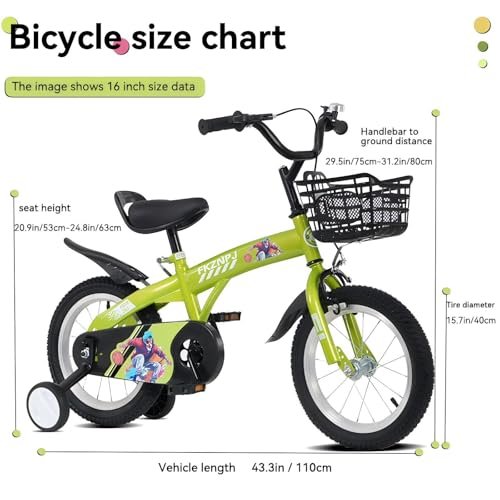
Frame material is the other thing worth looking at before you dismiss budget bikes entirely. This bike uses a high-carbon steel frame rather than standard mild steel. The practical difference: high-carbon steel handles lateral impacts — drops, curb hits, pile-ons in the garage — without bending the way thinner mild steel frames sometimes do. It also means the bike weighs 22 pounds, which is typical for the category. If you've seen sub-15-pound options at this wheel size, they're either aluminum (a different material, not inherently better for this use case) or the weight is understated in the listing.
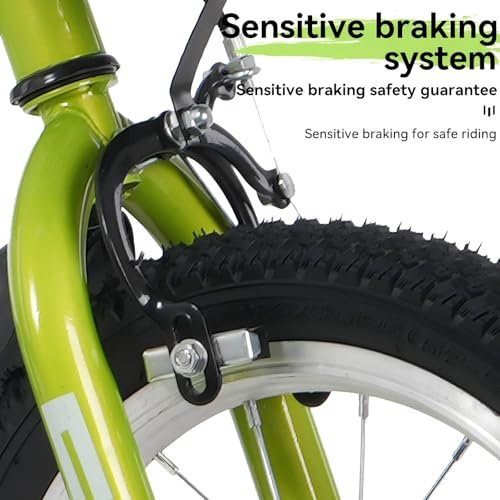
The drivetrain here is single-speed, which is the right call for a first pedal bike. Gears add mechanical complexity and maintenance that serve no purpose for a child learning on paved streets or mild trails. Single-speed also means fewer components that can fall out of adjustment between tune-ups. The V-brake system — two arms squeezing the wheel rim — gives kids a familiar hand-lever stopping experience that's straightforward to learn and easy to service if a cable stretches.
Where and How This Bike Actually Gets Used
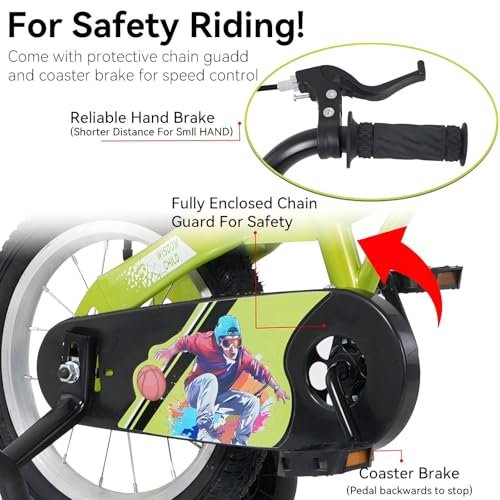
The Majnesvon 18-inch is rated for paved roads, unpaved trails, and urban terrain — which in practical terms means driveways, sidewalks, neighborhood streets, and the occasional gravel path through a park. It's not built for mountain bike trails or jump parks. The no-suspension frame is fine for smooth to moderately rough surfaces; on anything rougher, the rider feels every bump directly, which younger kids often don't mind and older kids start to notice.
The night-glow training wheels are a genuine practical feature rather than a cosmetic one. They're made from reflective or phosphorescent material that catches headlights and stays visible in low light — no batteries required. For early-evening rides in fall or spring when it gets dark faster than expected, that visibility adds a real safety margin. These are not LED lights; they reflect rather than emit, so they work passively without any charging or battery replacement.
Training wheels on this bike are included and designed for the learning phase. They're not meant to stay on indefinitely — once a child has consistent balance and can steer predictably, removing them is the right next step. The adjustable seat means you're not buying a new bike every 12 months just because the child grew two inches; you're adjusting the seat post and adding another season of use to the same frame.
Keeping This Bike Safe and Road-Ready
The V-brake system needs occasional cable tension checks. As brake cables stretch with use — which happens faster with kids who squeeze hard at the last second — the lever travel increases and stopping distance gets longer. A quick check: with the bike stationary, squeeze each brake lever and confirm it doesn't travel more than halfway to the handlebar before the brake engages firmly. If it does, the cable barrel adjuster (the threaded cylinder where the cable enters the lever) usually corrects it without tools in under two minutes.
The high-carbon steel frame is durable, but it will surface-rust if left wet consistently. Keep the bike stored out of standing water and wipe it down after rides in rain or wet grass. If you see surface rust forming at weld points, a light coat of chain lubricant on those spots slows oxidation. The chain itself should be lubricated every few weeks during regular use — a dry chain skips, wears faster, and is audible from the sidewalk.
- Training wheel check: Confirm both training wheels are tightened snugly before every ride. Loose training wheels shift side to side, which teaches a child bad balancing habits and can tip the bike unexpectedly.
- Seat height rule: The child should be able to place both feet flat (or nearly flat) on the ground while seated. A seat that's too high creates instability at stops; too low puts strain on the knees during pedaling.
- Helmet fit: This isn't specific to this bike, but it's worth stating plainly — a helmet that sits too far back exposes the forehead. The front edge should sit two finger-widths above the eyebrows.
- Weight limit awareness: Check the product's stated weight capacity before putting a larger child on an 18-inch frame. Exceeding the rated load stresses the frame welds and axle hardware in ways that aren't always visually obvious.
If this bike is going into storage for the winter, let the tires deflate slightly (not fully — just reduce pressure a few PSI) to prevent flat spots from sitting in one position for months. Hang it or store it off the ground if possible. When you bring it back out in spring, re-inflate tires to the PSI stamped on the sidewall, check brake tension, and lubricate the chain before the first ride.
Frequently Asked Questions
Is 18 inches the right wheel size for my kid?
Generally, 18-inch wheels suit kids roughly 4 to 8 years old, but inseam matters more than age. Your child should be able to sit on the seat at its lowest adjustment and touch the ground with both feet — flat or near-flat. If they're tiptoeing at the lowest setting, the bike is too big. Measure before you order rather than guessing by age alone.
Do the training wheels come pre-attached or in the box?
The product listing includes training wheels as part of the package. Confirm attachment status when your box arrives — if they require mounting, it's a straightforward process involving the rear axle bolts, and no special tools beyond a basic wrench are needed.
What do "night-glow training wheels" actually mean — are they battery-powered?
No batteries. Night-glow training wheels use reflective or phosphorescent material that catches car headlights and stays visible in low-light conditions like early evening rides. They glow passively — nothing to charge, nothing to replace. They add real visibility without adding any maintenance.
Is this bike comparable to a Woom or Prevelo?
No, and it's worth being direct about that. Woom and Prevelo are lightweight, precision-built bikes at a significantly higher investment — they're optimized for kids who are already confident riders or who ride frequently enough to benefit from a sub-12-pound aluminum frame. The Majnesvon bike is for families who need a solid, functional first bike on a practical budget. The high-carbon steel frame handles normal kid use well; it won't match the weight or component quality of a premium brand, and that's reflected in the positioning, not a flaw in the product.
Can a 3-year-old actually ride this, or is 18 inches too big?
It depends entirely on the child's height and inseam. Some tall 3-year-olds will fit fine at the seat's lowest setting; smaller or average-height 3-year-olds will likely be better served by a 14- or 16-inch wheel. Don't go by age alone — measure inseam, look up the bike's minimum seat height, and compare before ordering.
How hard is assembly, and does everything come in the box?
Kids' bikes in this category typically ship with the frame, wheels, and drivetrain partially assembled, with handlebars, seat, pedals, and training wheels requiring attachment. Hardware for those components should be included. Assembly is generally manageable for one adult with basic tools — a wrench and possibly a hex key set — in under 30 minutes. Check the box contents against the parts list in the instruction sheet immediately after opening, before you start, so you're not mid-assembly and missing a bolt.